
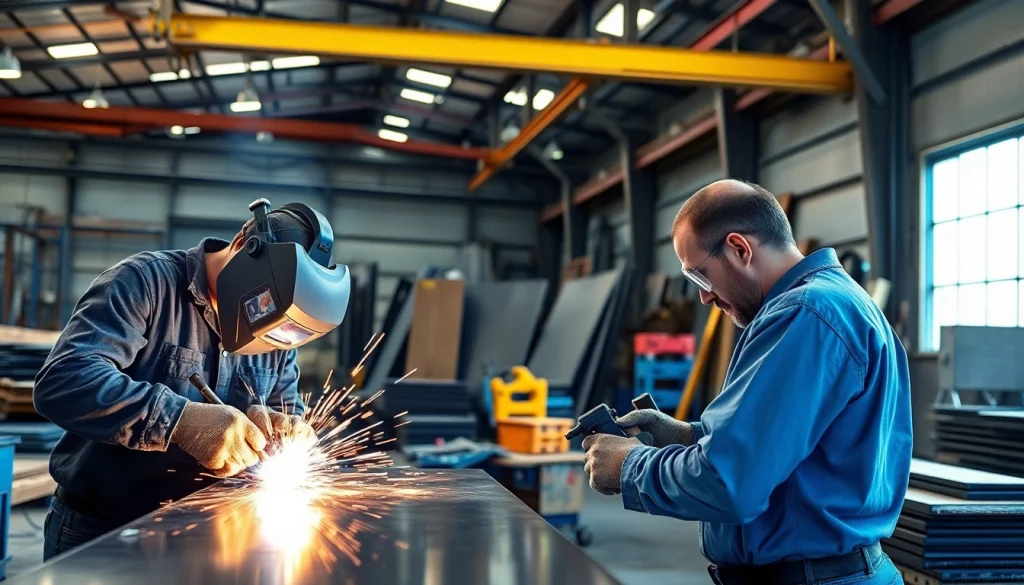
What is Custom Steel Fabrication?
Definition and Overview of Steel Fabrication
Custom steel fabrication is a specialized process in which individual pieces of steel are tailored to meet specific design requirements and applications. This manufacturing process involves transforming raw steel into precise shapes and sizes, facilitating the creation of components that serve a wide variety of industrial and commercial purposes. Steel fabrication is not only about cutting and shaping steel, but it also includes processes such as welding, assembly, and finishing treatments that enhance both the functionality and aesthetics of the final product.
Benefits of Custom Fabrication
The benefits of custom steel fabrication are manifold. Firstly, it allows for unparalleled design flexibility, enabling businesses to realize unique concepts and specifications that off-the-shelf options might not provide. Additionally, custom fabrication is often synonymous with higher quality. Skilled fabricators employ expert techniques and the latest technology to ensure every piece meets stringent quality standards, which in turn leads to improved durability and performance.
Furthermore, custom fabrication aids in resource optimization. Rather than making do with standard sizes, businesses can have components tailored to reduce waste and enhance efficiency. This process also allows for better compatibility with existing systems, an important consideration in industries like construction and manufacturing.
Common Applications of Custom Steel Fabrication
There are numerous applications of custom steel fabrication across various industries. In construction, custom steel is commonly used for structural beams, supports, and frames that provide essential strength and stability to buildings. Manufacturing facilities often require customized machinery and equipment frameworks, while the automotive and aerospace industries utilize fabricated steel components for their vehicles and aircraft due to the material’s strength-to-weight ratio.
Moreover, custom steel fabrication plays a critical role in the installation of industrial equipment, custom railings, and stair cases which not only provide safety but also aesthetic value. Other common applications include art installations, where artists employ fabricated steel to create structures that are both visually striking and structurally sound.
Key Processes in Custom Steel Fabrication
Cutting Techniques and Equipment
Cutting is one of the foundational steps in custom steel fabrication and involves various methods tailored to achieve different outcomes. Common methods include laser cutting, water jet cutting, and plasma cutting, each differing in precision, speed, and material type suitability.
Laser cutting, for instance, employs high-powered lasers to slice through metal with extraordinary accuracy and minimal thermal distortion, making it ideal for intricate designs. Water jet cutting, on the other hand, uses a high-pressure jet of water mixed with abrasive materials, facilitating a clean cut for thicker materials without altering their structural integrity. Plasma cutting is frequently used for thicker sections of steel where speed is essential, generating a high-temperature arc to melt through metal effortlessly.
Welding Methods for Custom Steel
Welding forms the backbone of the assembly process in steel fabrication, allowing different sections of metal to be fused together into a finished product. There are several welding types commonly employed in custom fabrication, including MIG (Metal Inert Gas) welding, TIG (Tungsten Inert Gas) welding, and Stick welding.
MIG welding is known for its speed and efficiency, making it suitable for projects requiring a quick turnaround. TIG welding, conversely, provides superior control and is often preferred for thinner materials and those needing a clean finish. Stick welding, while being less sophisticated, is versatile and can be used in various settings, especially outdoors. The choice of welding method directly affects the strength, appearance, and cost of the final product.
Finishing Treatments in Fabrication
Finishing treatments are essential steps in the custom steel fabrication process, as they enhance the durability and visual appeal of the final product. Common treatments include galvanizing, powder coating, and painting. Galvanizing provides a protective zinc layer, which resists corrosion, making it ideal for outdoor applications. Powder coating involves applying a dry powder that is subsequently cured under heat, resulting in a hard finish that is resistant to scratches, chipping, and fading.
Painting, while also protective, allows for infinite color options and can integrate finishes that suit specific branding needs. The choice of finishing treatment should align with the intended environment of the product and its aesthetic requirements.
Choosing the Right Fabrication Partner
Factors to Consider in Selecting a Fabricator
When searching for the ideal fabrication partner, several crucial factors should be taken into account. First and foremost, assess the fabricator’s capabilities and experiences, ensuring they possess the necessary skills and technology to handle your specific project requirements. It’s also critical to consider their production capacity—can they handle your project size, and do they have a reputation for meeting deadlines?
Additionally, look into the fabricator’s engineering support; having access to experienced engineers can be invaluable in refining designs and optimizing materials during the fabrication process. Financial stability is another aspect to consider, as it can affect their ability to deliver quality work on time.
Evaluating Quality and Reliability
Quality and reliability should be paramount in your evaluation of a potential fabrication partner. Look for certifications or compliance with industry standards, which can serve as quality indicators. Additionally, request samples of previous work and discuss any on-going projects or case studies to gauge their ability to deliver on promises.
Engaging directly with previous clients can yield insights into the fabricator’s consistency and customer service. A trustworthy fabricator should be transparent about their processes, timelines, and any potential issues that could arise during the fabrication.
Client Testimonials and Case Studies
Client testimonials and case studies can provide a clear picture of a fabrication partner’s success and reliability. Look for client feedback that specifically addresses project challenges, solutions implemented, and overall satisfaction with the end product. Comprehensive case studies detailing the project timelines, budgets, and specifics can elucidate the fabricator’s capacity to handle projects mirroring your own needs.
Additionally, any awards or recognitions a fabricator has received can serve as further testament to their expertise and commitment to quality.
Cost Considerations in Custom Steel Fabrication
Understanding Pricing Models
Understanding the pricing models used in custom steel fabrication is crucial for effective budgeting. Pricing can vary based on materials, project complexity, and overall production timelines. Most fabricators offer quotes based on a per-project basis, taking into account factors such as design specifications, fabrication processes, and finishing requirements.
It’s advisable to obtain multiple quotes and seek breakdowns of costs to ensure clarity around where budget allocations lie. Be cautious of significantly lower bids, as these can sometimes indicate compromised quality or underestimation of project complexities.
Analyzing Cost vs. Quality
When it comes to steel fabrication, it’s often tempting to opt for the lowest price. However, understanding the trade-off between cost and quality is vital. Higher quality often translates to longer-lasting, more reliable products, which can ultimately save you money on repairs and replacements in the long run.
Evaluating the total cost of ownership—factoring in maintenance, durability, and operational efficiency—can provide a clearer picture of the value offered by various fabrication options. Prioritize quality materials and reputable fabrication processes over cost to ensure satisfactory outcomes.
Budgeting for Custom Fabrication Projects
Budgeting for custom fabrication projects requires a thorough understanding of all potential costs involved in the project. Start by defining your project scope clearly, which will serve as a basis for estimating material and labor costs. Don’t forget to allocate funds for unforeseen expenses that may crop up during the design or fabrication stages.
Setting a realistic budget requires open dialogue with your fabrication partner regarding their timelines, process expectations, and any potential risks that could impact cost. Establishing a contingency fund of 10-15% of the project budget can help absorb these unexpected costs without derailing the project.
Future Trends in Steel Fabrication
Technological Advancements Influencing Custom Fabrication
The future of custom steel fabrication is rapidly evolving with the introduction of advanced technologies, such as automation, robotics, and Industry 4.0 principles. Automated cutting and welding systems enhance precision, reduce labor costs, and lead to faster turnaround times, aligning production with demand more effectively.
Furthermore, the integration of computer-aided design (CAD) and computer-aided manufacturing (CAM) systems significantly improves planning and execution accuracy. These technological advancements facilitate greater customization and the ability to produce complex designs that previously were not feasible.
Sustainability in Steel Fabrication
As industries move towards greener practices, sustainability in steel fabrication has become increasingly essential. Fabricators are investing in more energy-efficient processes, utilizing recycled materials, and adopting waste-reduction strategies. The trend toward sustainability not only aligns with global environmental goals but also meets consumer demand for eco-friendly practices.
The use of sustainable materials and methods can enhance a company’s reputation and appeal, making it essential for modern fabricators to consider their environmental footprint from sourcing raw materials to their final products.
Emerging Markets and Opportunities in Fabrication
The global demand for custom steel fabrication services continues to expand, particularly in developing markets where infrastructure projects are on the rise. Emerging industries, such as renewable energy, are presenting substantial opportunities for fabricators who can adapt to new demands and requirements. Moreover, with the rise of the Internet of Things (IoT), connected devices are leading to new innovations in design and fabrication processes, opening new avenues for custom solutions.
As technology advances, fabricators must remain agile, adapting to changes in consumer preferences and market dynamics to seize emerging opportunities that arise in this growing field.